The Ultimate Guide to Cenote Calavera: Tulum’s “Temple of Doom”
Key Takeaways:
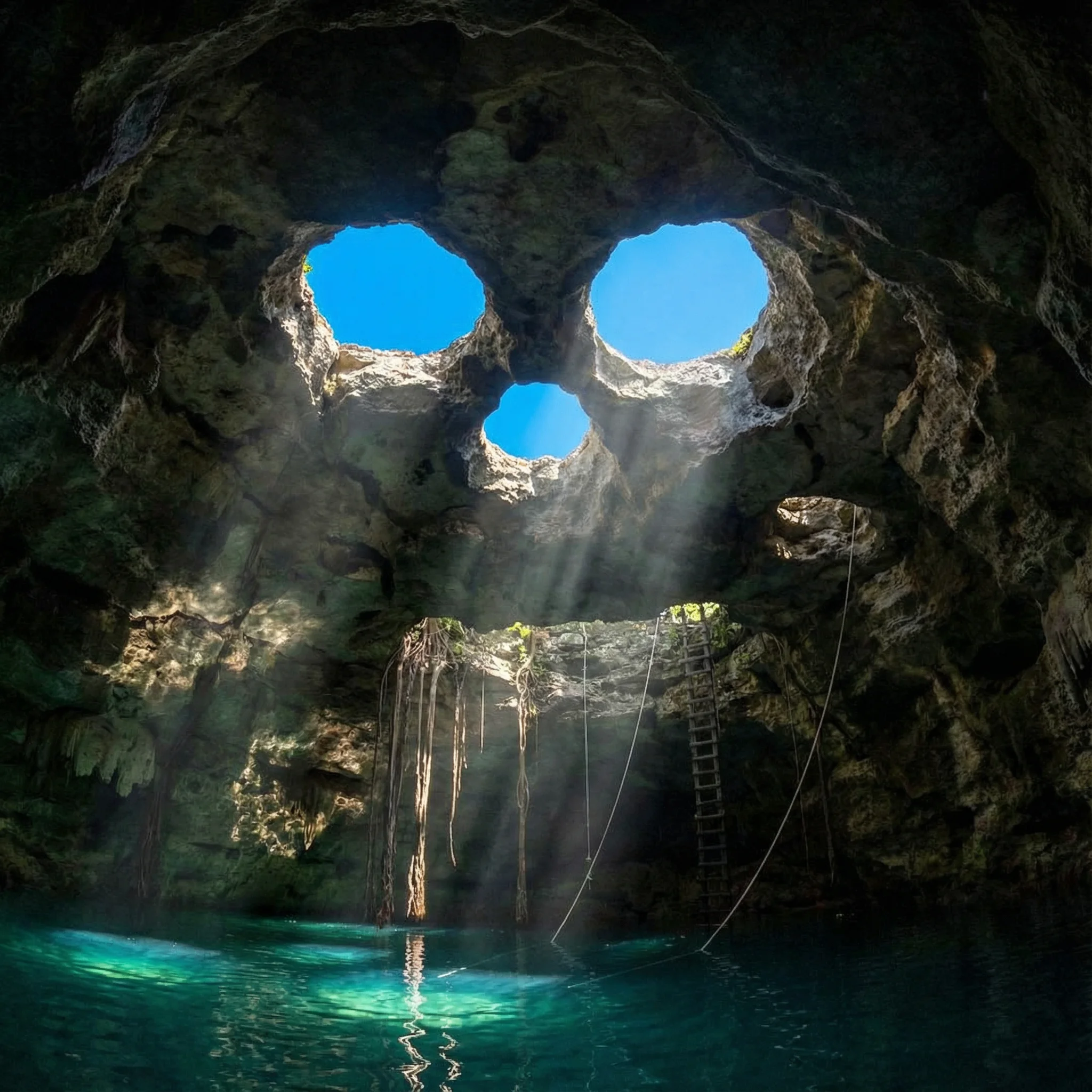
- Why “Skull”? Named for its three limestone openings (one mouth, two eyes) resembling a skull from above and below.
- Adrenaline Level: High. Famous for cliff jumping through tight rock openings and a central rope swing.
- Water Type: Fresh water surface with a distinct halocline (salt/fresh mix) at depth.
- Best For: Thrill-seekers, confident swimmers, and photographers.
- Entrance Fee: ~300 MXN (Cash Only).
Introduction
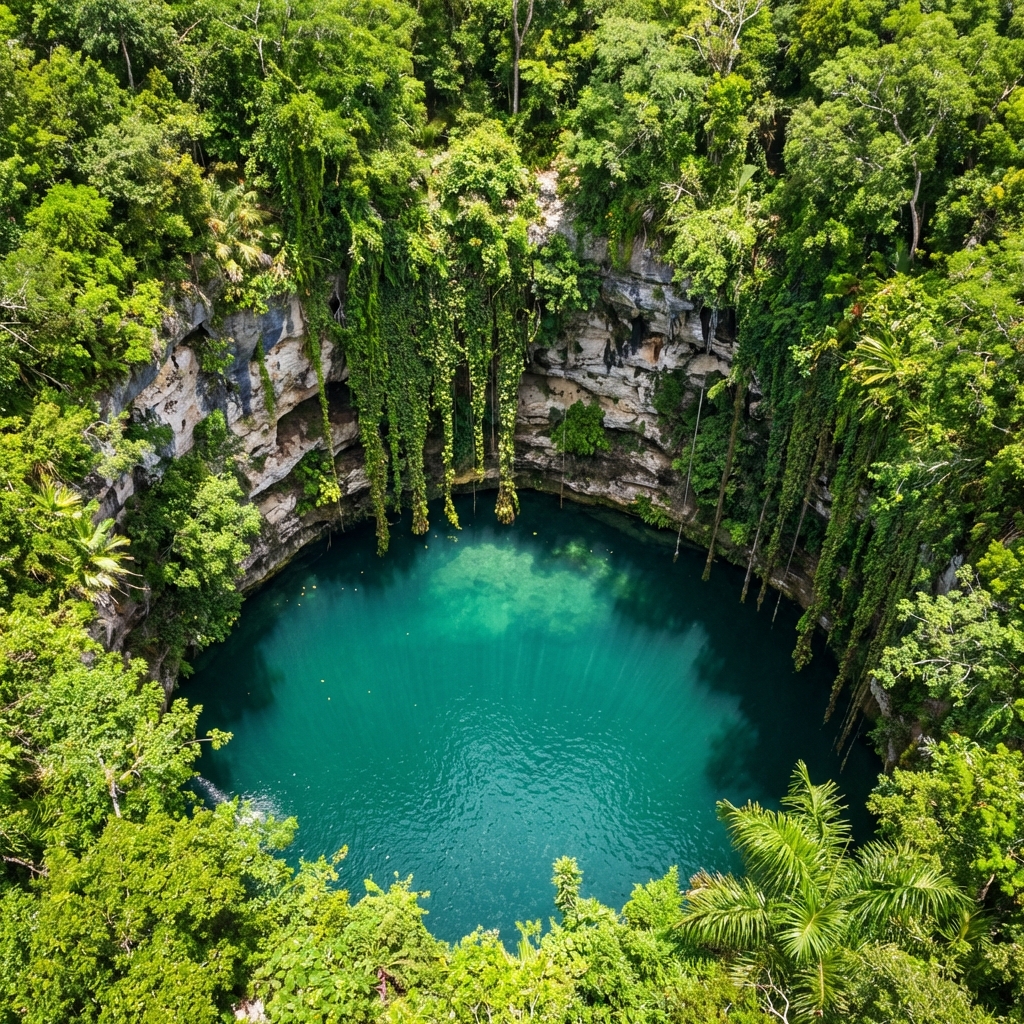
Located just outside Tulum Pueblo, Cenote Calavera (Skull Cenote) has transformed from a diver’s secret to one of the most Instagrammed adventure spots in the Riviera Maya. Unlike the open-air “swimming pool” style cenotes (like Cenote Azul), Calavera is a semi-open cenote (specifically a cántaro or jug style). Its roof has partially collapsed, revealing a subterranean water world connected to the massive Sac Actun cave system.
While it is visually stunning, it is best known as an interactive playground. This guide covers the geological science, the adrenaline-pumping jumps, and the practical logistics you need to know before you go.
Why is it Called “Skull Cenote”?
The name Calavera is Spanish for “Skull.” The moniker is not derived from ancient legends of death, but rather from a trick of perspective and geology.
- The View from Above: The cenote roof features three distinct holes: one large opening (approximately 10 meters in diameter) and two smaller, circular openings nearby. When viewed from an aerial perspective, these form the “mouth” and “eyes” of a skull.
- The View from Below: If you float in the center of the cenote and look up around midday, the sunlight streaming through the three holes creates a glowing skull face against the dark rock ceiling.
Note on the “Temple of Doom”: You may hear locals or divers refer to this site as the “Temple of Doom.” This nickname is widely used in the diving community, referencing the cave’s intricate and sometimes intimidating underwater passages, as well as the “leap of faith” required to enter.
The Adrenaline Experience: Jumping & Swinging
Cenote Calavera is not for wading; it is for jumping. There is no shallow end here””the water depth drops immediately to approximately 3 meters (10 feet) at the edges and up to 15–16 meters (50+ feet) in the center.
1. The “Eye” Jumps
The most unique feature of Calavera is the ability to jump through the two smaller holes (the “eyes”).
- The Drop: The jump is roughly 3 meters (8–10 feet).
- The Technique: These holes are narrow. You must perform a “pencil jump” (arms crossed over chest, legs straight and together) to avoid scraping the rock edges.
- Safety Warning: Do not attempt a flip through the small holes. Spatial awareness is critical here.
2. The Main “Mouth” Jump
The large opening offers a spacious area for cannonballs, flips, and diving. The height is the same as the eye holes, but without the claustrophobic entry.
3. The Rope Swing
Suspended in the center of the main opening is a rope swing. It is a popular spot for photos and offers a fun way to drop into the water. Note: The swing can get slippery; grip tight..
4. The Ladder
A tall wooden ladder descends into the water from the main rim. It is the primary way to exit the cenote.
- Caution: The ladder is perpetually wet and extremely slippery. Ascend with care.
Geology & Diving: The Science Beneath
For those interested in what lies beneath the surface, Cenote Calavera is geologically significant.
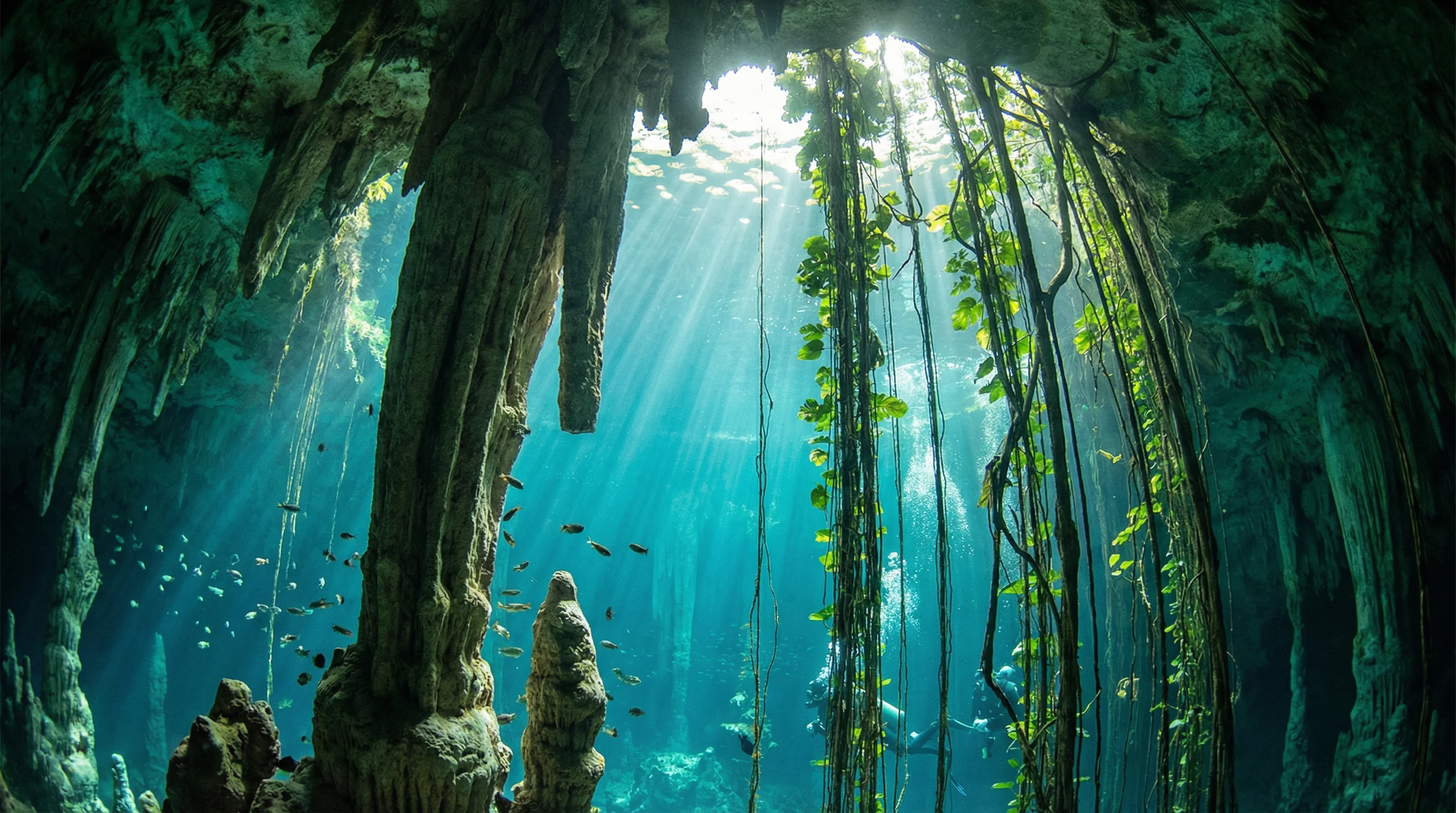
- The Halocline: At a depth of approximately 12 to 13 meters, fresh water meets saltwater. Because they have different densities, they do not mix immediately, creating a visual distortion layer known as a halocline. Divers passing through this layer experience a blurry, oil-and-water visual effect.
- Sac Actun Connection: This cenote is a portal to the Sac Actun system, the second-longest underwater cave system in the world. While snorkelers can see rock formations and fish near the surface, certified cave divers can explore the extensive tunnels where Mayan pottery and ancient remains have historically been found.
Practical Visitor Guide (2025/2026 Data)
Location & Transport
- Address: QROO 109 (Road to Coba), approx. 2–3 km from Tulum Center.
- By Bike: The most popular method. It is a flat, 20–25 minute ride from Tulum Pueblo. Be careful of highway traffic.
- By Taxi: A 5–10 minute drive from town. Expect to pay 100–150 MXN one way (negotiate before entering).
- Walking: Possible (approx. 45–60 mins from town), but not recommended in the midday heat.
Hours & Best Time to Visit
- Hours: Open 7 days a week, 9:00 AM – 5:00 PM.
- Best Time: Arrive exactly at 9:00 AM to avoid crowds. The cenote is small, so it feels crowded quickly. Alternatively, late afternoon (3:30 PM) can be quieter.
Costs (Cash Only)
- Entrance Fee: $250 – $300 MXN per person. (Prices fluctuate; bring $300 to be safe).
- Life Jacket: ~$50 MXN (Optional for strong swimmers, but recommended).
- Camera Fee: Strictly Enforced. If you bring a GoPro, drone, or professional camera, expect an additional charge of $200 – $250 MXN. Cell phone photography is usually included in the entrance ticket.
Facilities
- Restrooms: Yes, basic on-site facilities.
- Showers: Mandatory showers are located near the entrance.
- Food/Drink: There is a small kiosk/snack bar selling basic drinks and snacks (sometimes tacos), but it is not a full-service restaurant.
- Lockers: Limited or non-existent. Leave valuables at your hotel or keep them in a waterproof bag.
Rules & Etiquette
To protect the fragile ecosystem and ensure safety:
- NO Sunscreen: Even biodegradable sunscreen is often prohibited to protect the water clarity and fish. Shower off all lotions before entering.
- Shower First: Mandatory to remove oils and sweat.
- No Alcohol: Outside alcohol is generally not permitted.
- Don’t Touch Roots: You will see tree roots hanging down from the ceiling into the water; do not pull or swing on them.
Summary Table
| Feature | Details |
|---|---|
| Type | Semi-open (Cántaro/Jug) |
| Depth | ~3m (edges) to ~15m (center) |
| Jump Height | ~3 meters (10 ft) |
| Water Temp | ~24°C / 75°F (Year-round) |
| Payment | CASH ONLY (Pesos preferred) |
| Vibe | Adventurous, Photogenic, Youthful |
Research conducted by CenotesGuide.com. Information is accurate as of late 2025/early 2026 travel data.