The Ultimate Guide to Cenote Dos Ojos: Tulum’s Underwater Cathedral
Key Takeaways
- Location: 22km North of Tulum (approx. 20 min drive); 50km South of Playa del Carmen.
- The “Two Eyes”: The system features two distinct sinkhole openings (East and West) connected by a massive underwater cavern zone.
- Best For: Both snorkelers and divers. It is one of the premier cavern diving sites in the world.
- Connection: Part of Sistema Sac Actun, the longest underwater cave system on Earth.
- Entrance Fee (Est. 2025/2026): ~400 MXN for general admission (swimming/snorkeling open areas); ~700–800 MXN for guided tours (required for the Bat Cave).
- Accessibility: Requires a 2.3km travel down a dirt road from the highway ticket booth; walking is difficult in the heat.
Introduction: The Gateway to Xibalba
Cenote Dos Ojos (Two Eyes) is arguably the most famous cenote in the Riviera Maya, and for good reason. Located just north of Tulum, this site offers a visual experience that feels otherworldly. The water is so exceptionally clear””often exceeding 100 meters (330 feet) of visibility””that divers and snorkelers often describe the sensation as “flying” rather than swimming.
While it is a major tourist attraction, it remains a site of significant geological importance. In 2018, explorers discovered that the Dos Ojos system is actually connected to the Sistema Sac Actun, making it part of the largest flooded cave system in the world, stretching over 370 kilometers. For the ancient Maya, these waters were sacred portals to Xibalba, the underworld. Today, they serve as a pristine window into the geological history of the Yucatán Peninsula.
Understanding the Geography: The “Two Eyes”
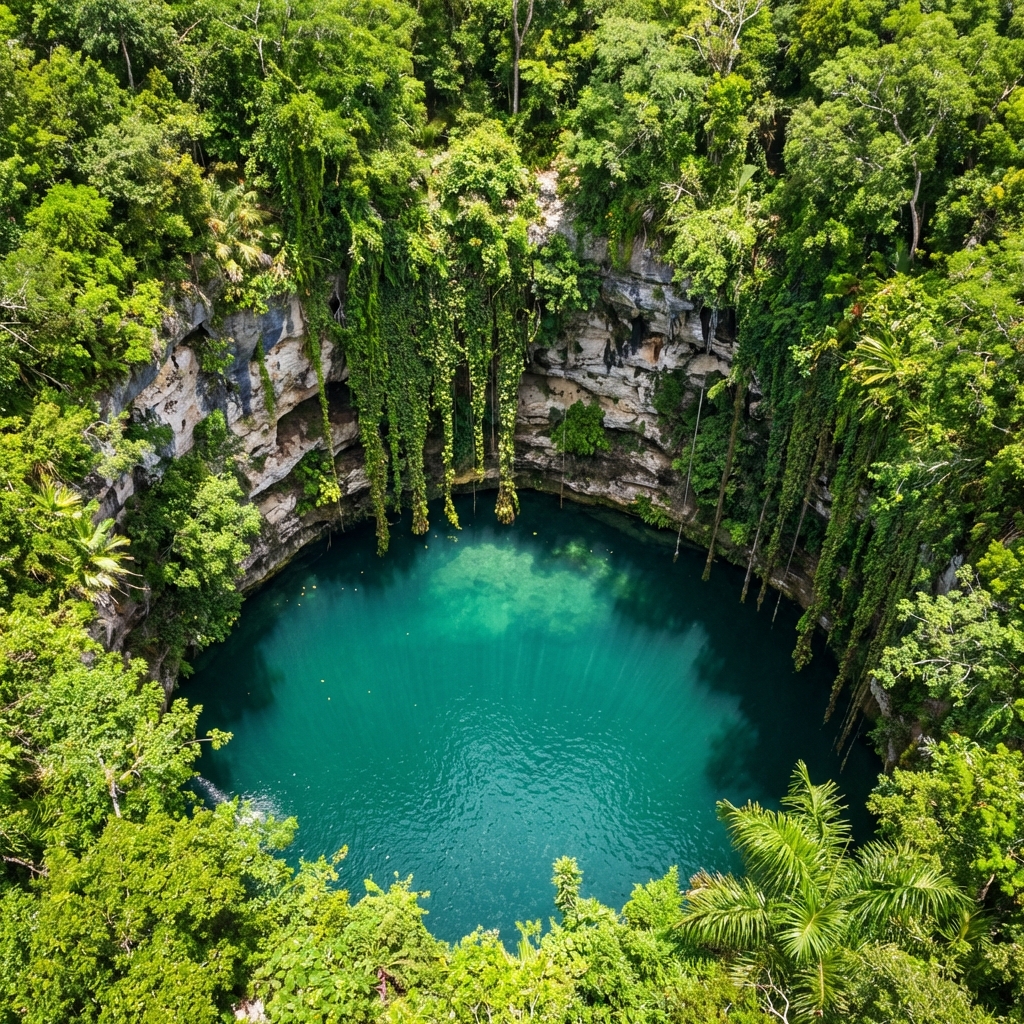
The name “Dos Ojos” refers to two neighboring circular sinkholes (cenotes) that act as the primary entrances to the larger cavern system below. They are connected by a 400-meter underwater passageway.
1. The East Eye (The Blue Eye)
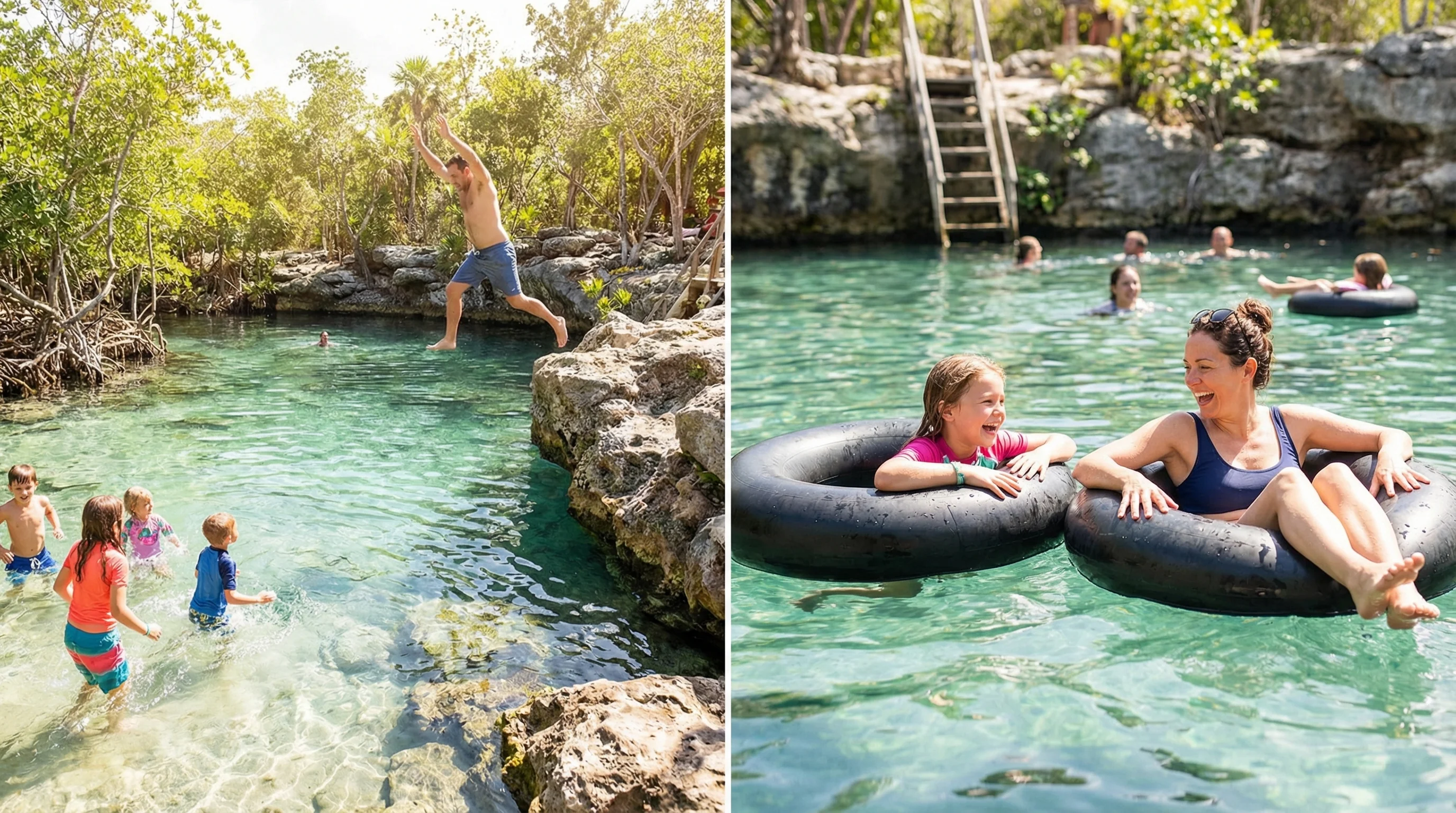
This is the primary entry point for most visitors. It is an open-air cenote characterized by incredible light penetration. When the sun hits the water, the limestone reflects a piercing turquoise blue. This area is large, shallow in parts, and perfect for casual swimming and open-air snorkeling. The interplay of light beams dancing through the water here is a photographer’s dream.
2. The West Eye (The Black Eye)
Located a short walk away, the West Eye is darker and more mysterious. While it has an opening to the sky, it is smaller and shadowed by dense jungle and cave overhangs. This “eye” serves as the main entry and exit point for the cavern diving routes. Because it receives less direct sunlight, the water appears a deep, ink-like blue. It is generally quieter and offers a more atmospheric, cave-like experience.
3. The Bat Cave (Baticueva)
While not one of the “eyes,” the Bat Cave is the system’s hidden gem. It is an air-filled dome within the cave system that has no natural light entrance from above. It is inhabited by a colony of bats that can be seen hanging from the stalactites. To reach it, you must traverse the water””either via a scuba dive or a guided snorkel tour that leads you through the dark tunnels.
Geology and Formations
Cenote Dos Ojos is a textbook example of an anchialine cave system. This means it contains both fresh groundwater (the top layer) and saline water (deeper down), though recreational visitors mostly stay in the fresh layer.
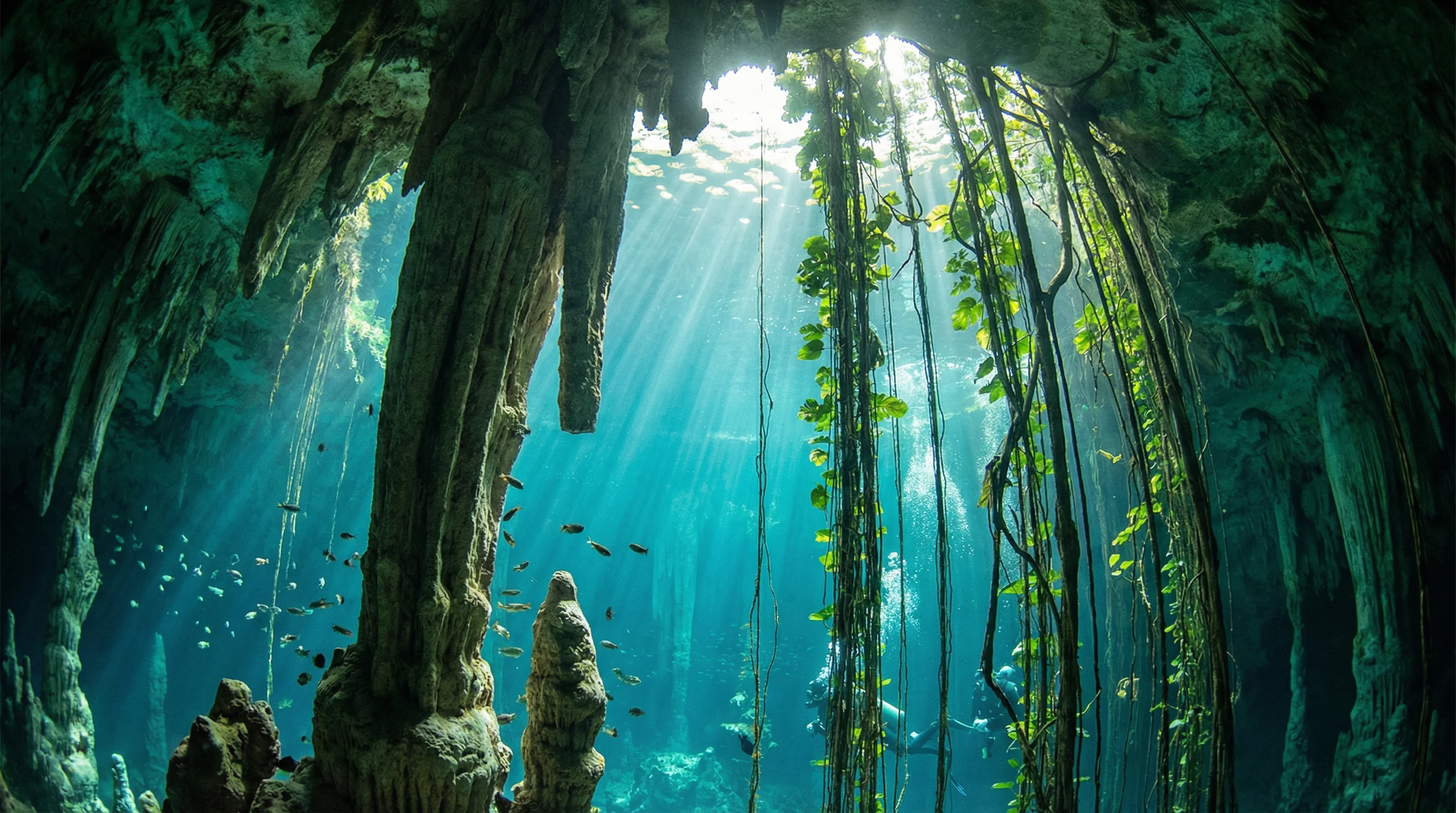
The cave formations (speleothems) here are ancient. You will see massive columns, delicate stalactites (hanging from the ceiling), and stalagmites (rising from the floor). These formed over thousands of years during the last Ice Age when the sea levels were lower and these caves were dry, air-filled chambers. When the ice melted and sea levels rose, the caves flooded, preserving the formations in a crystal-clear time capsule.
Note on Conservation: These formations are incredibly fragile. The oils from human skin can stop their growth or damage them. Do not touch any rock formations, walls, or roots while in the cenote.
Diving Guide: The Barbie and The Bat
Dos Ojos is world-renowned for its cavern diving. Because it is a “cavern” dive (meaning you are always within sight of natural light or within a specific distance of open water), divers with an Open Water certification can participate, provided they are with a certified cave guide.
There are two distinct dive lines (routes), usually done as a two-tank dive:
Route 1: The Barbie Line
- Profile: Max depth ~9m (30ft); Length ~500m.
- Experience: This is the brighter, more “scenic” route. It follows the opening of the Second Eye, allowing for spectacular natural light shows. It is famous for its massive columns and stalactites.
- The Name: It is named after a plastic Barbie doll that a diver jokingly attached to the guideline years ago. It is still there, often serving as a bizarre photo op for divers.
Route 2: The Bat Cave Line
- Profile: Max depth ~10m (33ft); Length ~300m.
- Experience: This route feels more like a true cave dive. It is darker and tighter than the Barbie Line. The highlight is surfacing inside the air-filled Bat Cave dome. Here, you pop your head above water in pitch darkness (illuminated by flashlights) to see the bats and the cathedral-like ceiling structure before descending again to swim out.
Snorkeling Guide: DIY vs. Guided
Snorkeling at Dos Ojos is excellent, but your experience depends heavily on your ticket type.
- General Admission (DIY Snorkeling): With the standard entrance ticket, you can snorkel in the open areas of the East and West Eyes. The visibility is amazing, and you can see divers bubbling below you. However, you cannot enter the deeper cave tunnels or the Bat Cave on your own for safety reasons.
- Guided Snorkel Tour: To see the Bat Cave as a snorkeler, you must hire a guide (often part of a “premium” ticket package). The guide will lead you with a flashlight through the darker tunnels connecting the eyes and into the Bat Cave. This is highly recommended if you are not a diver but want the full experience.
Practical Visitor Information (2025/2026)
Fees and Costs
Prices are subject to change; bring Pesos (Cash) as card machines are often unreliable or unavailable.
- General Entrance: ~400 MXN (approx. $24 USD). Includes life jacket (mandatory) and access to open swimming areas.
- Guided Tour Package: ~700–800 MXN. Includes entrance, guide, snorkeling gear, locker, and access to the Bat Cave.
- Snorkel Gear Rental: ~200 MXN if not included in your package.
- Lockers: ~50–100 MXN rental fee if not included.
- Parking: Free within the park.
Opening Hours
- Daily: 8:00 AM – 5:00 PM.
- Best Time to Visit: Arrive right at 8:00 AM to beat the tour buses, or after 3:00 PM as crowds thin out. Mid-day (10 AM – 2 PM) is the busiest time.
Facilities
- Bathrooms & Changing Rooms: Clean and well-maintained.
- Showers: Mandatory use before entering the water to remove chemicals.
- Restaurant: There is a restaurant on-site, though many visitors bring their own snacks.
Getting There
Dos Ojos is located inside Parque Dos Ojos.
- The Highway Entrance: The ticket booth is right off Highway 307.
- The “Last Mile”: The actual cenote is about 2.3 km (1.4 miles) from the highway ticket booth down a dirt road.
- Rental Car: You can drive all the way to the cenote parking lot.
- Colectivo: The van drops you at the highway. You must walk the 2.3km (30 mins in heat) or hope for a taxi/shuttle at the entrance (not always guaranteed).
- Taxi: A taxi from Tulum can take you all the way in, but ensure they wait for you or you arrange a pickup, as cell service is spotty.
Expert Tips for a Smooth Visit
- Bring Cash: The ticket booth and gear rental often do not accept cards, or the exchange rate offered is poor.
- Biodegradable Only: Sunscreen and bug spray are generally forbidden in the water to protect the ecosystem. Wear a rash guard (swim shirt) for sun protection instead.
- Life Jackets are Mandatory: Even for strong swimmers, the park enforces life jacket use for snorkelers to prevent fatigue and ensure buoyancy over deep areas.
- Explore the Park: Your ticket gets you into the park, but other cenotes inside (like Cenote Nicte-Ha or The Pit) usually have separate entrance fees. Plan your budget accordingly if you want to “cenote hop”.
🗺️ View Interactive Map of Dos Ojos Dive Shops & Cenotes →
Compare ratings, explore operator profiles, and book directly with our curated selection of top-rated dive shops and guides.
📋 Complete Things to Do at Dos Ojos 2026 →
Detailed activity guide covering snorkeling vs diving, transportation options, safety tips, pricing, and seasonal planning.