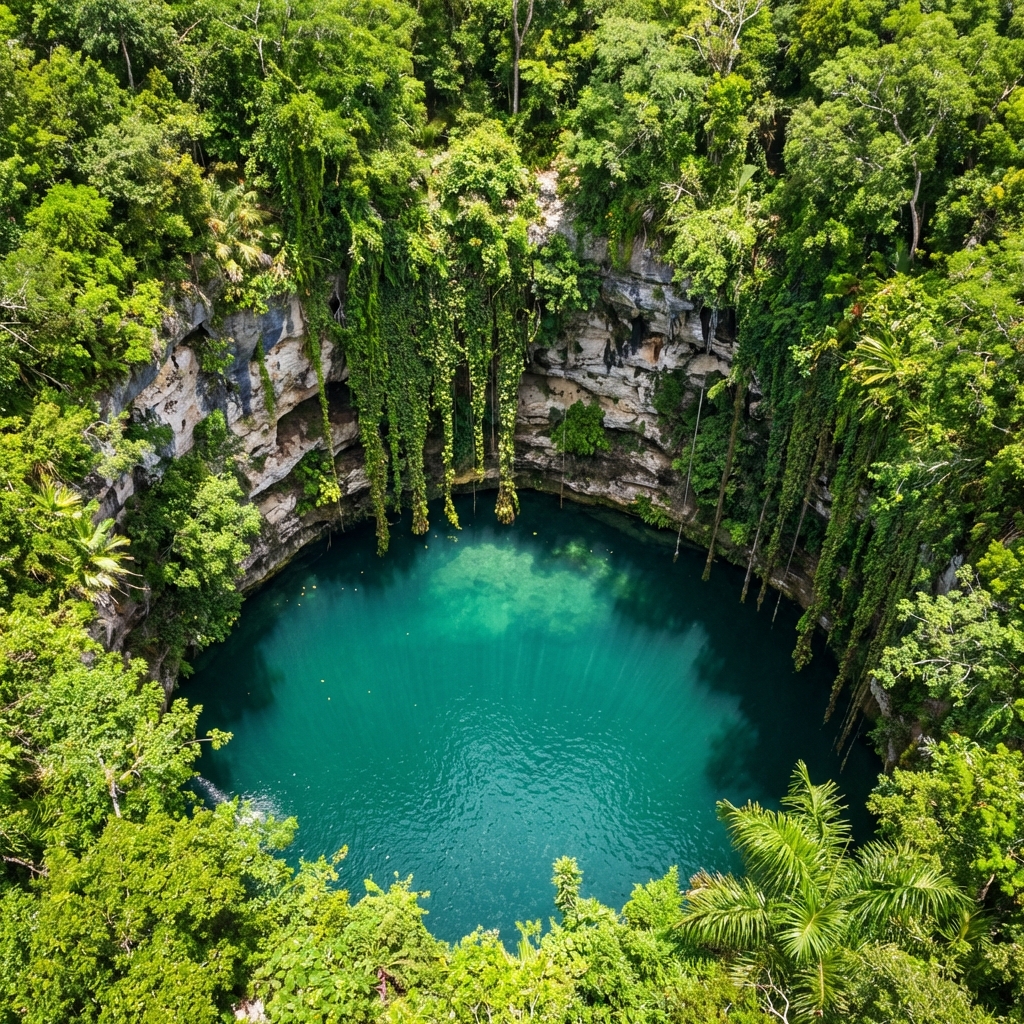
Dos Ojos Cenote is one of the most popular cenotes near Tulum, especially for snorkeling and cavern diving, and 2026 visits will look very similar to current experiences.
Quick Navigation:
Top Things to Do at Dos Ojos
Snorkeling in the Caverns
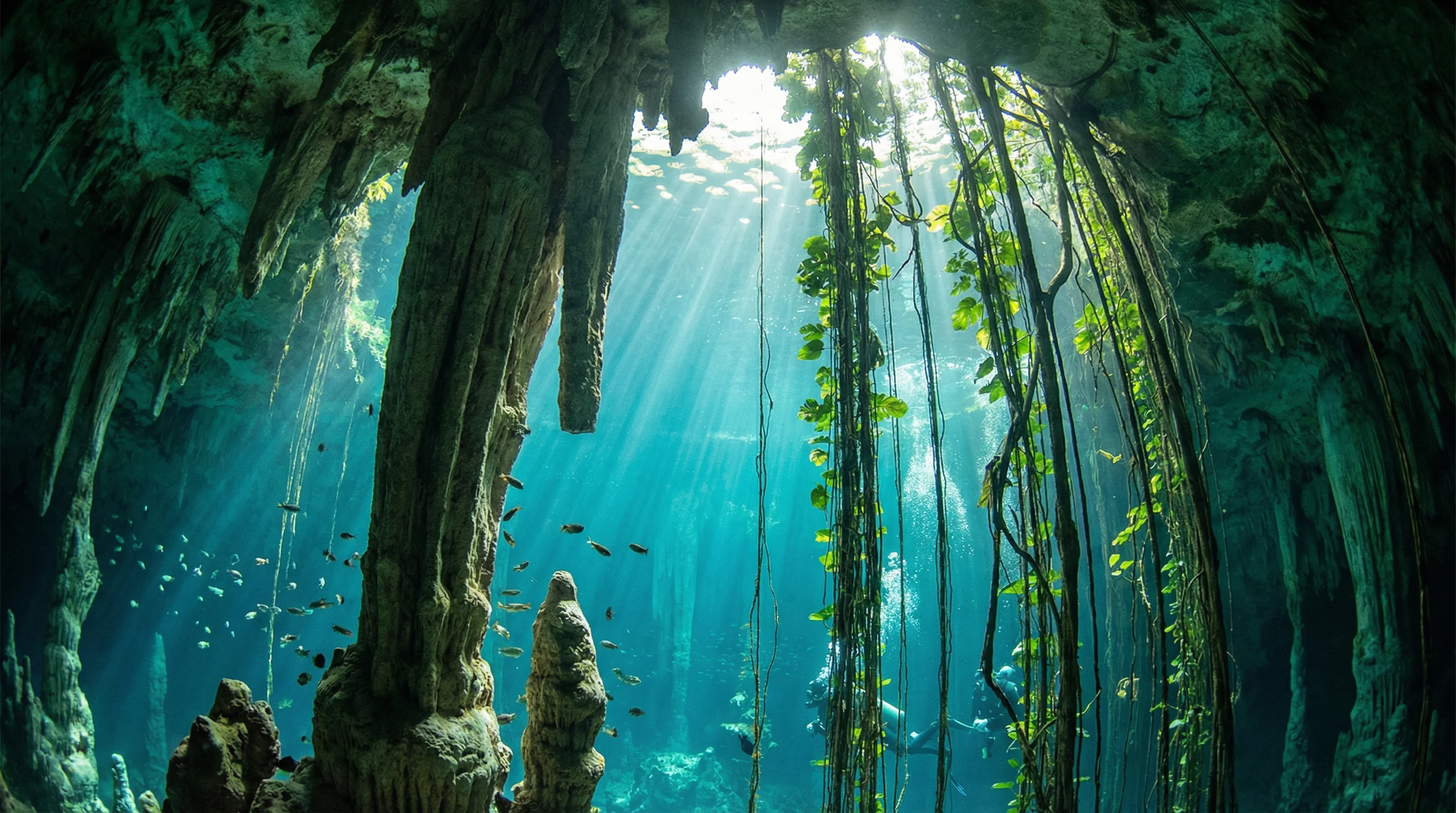
Swim through clear blue water, limestone formations, and light beams in the two “eyes” (pools) connected by underwater passages; guided tours and rental gear are available at the park entrance.
Cavern and Cave Scuba Diving
Certified divers can book guided cavern or cave dives that follow marked lines through the Dos Ojos system, including famous routes like “Barbie Line” and “Bat Cave,” usually organized through Tulum dive shops.
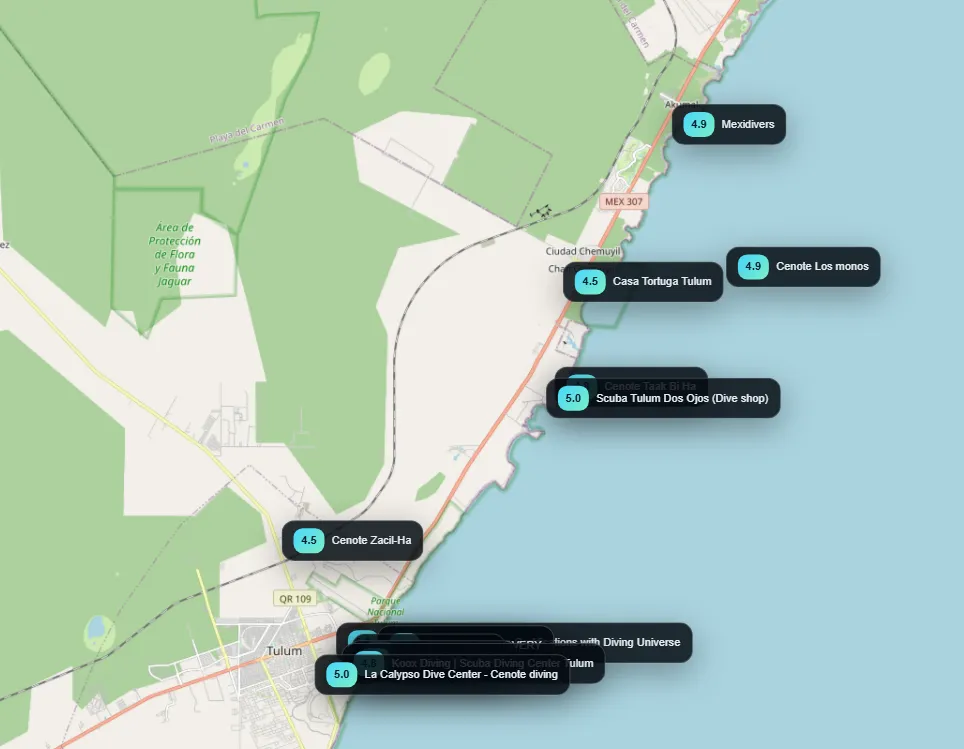
👉 Find Top-Rated Dive Shops on Our Interactive Map - Compare ratings, read reviews, and book directly.
Join a Guided Cenote Tour
Many local operators in Tulum run small-group trips that combine Dos Ojos with other nearby cenotes, often including transport, gear, and a guide who explains geology and safety.
Learn or Continue Scuba Training
Several Tulum dive centers offer cenote-focused courses and certifications, so you can do training dives in open water and then progress into guided cenote cavern dives.
Combine with Other Cenote Parks
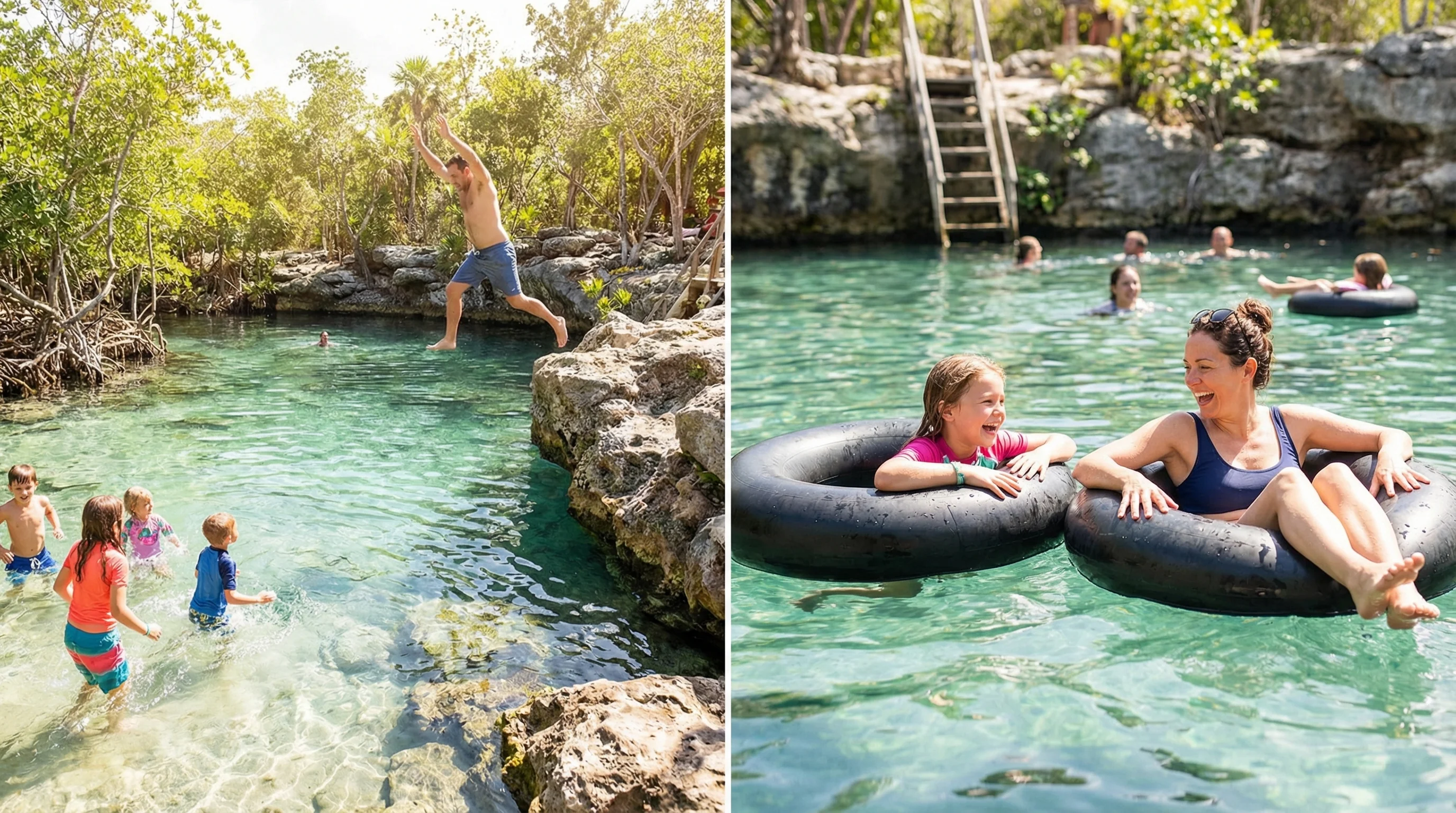
Nearby multi-cenote parks like Casa Tortuga offer additional swimming spots, zip-line style jumps, and more family-oriented infrastructure, which pairs well with a half-day at Dos Ojos.
Recommended Tour and Dive Operators
Diving Cenotes Tulum Highly rated dive shop in Tulum Centro offering two-tank cenote dives, including Dos Ojos, with full equipment and experienced guides.
Koox Diving Full-service adventure and diving center that runs Dos Ojos cenote dives and snorkel tours, with daily departures and hotel-area pickup options.
La Calypso Dive Center Well-reviewed, women-owned dive center specializing in cenote diving, offering small-group guided cavern dives for certified divers.
Mexidivers Tour agency and dive center that runs cenote snorkeling and scuba trips; reviews highlight good value for cenote snorkeling experiences.
Casa Tortuga Tulum Large tourist attraction with several cenotes, restrooms, and family-friendly facilities; useful if you want a less technical, more relaxed swimming day around your Dos Ojos visit.
🗺️ View All Operators on Interactive Map - Filter by ratings, compare locations, and check availability.
Practical Tips for 2026 Visits
Book Ahead in High Season
Operators advise reserving cenote tours and dives in advance, especially in winter and spring holidays, as small-group cenote trips fill quickly.
Go with a Certified Guide
Cenote caverns require strict safety protocols; using licensed guides from recognized dive centers is strongly recommended for both snorkeling routes and all dives.
Expect Fees and Card Payments
Park entry, gear rental, and guide services are charged separately; most dive centers and nearby attractions accept credit and debit cards.
Top Safety Tips for Cenote Diving in Tulum 2026
Cenote diving in Tulum is very safe when done with proper training, gear, and guides, and current 2024–2025 recommendations will still apply in 2026.
Training, Guides, and Limits
Dive Only with Proper Certification Recreational cenote dives require at least Open Water certification, and more advanced sites or depths typically call for Advanced Open Water; cave penetration is reserved for fully trained cave divers.
Always Follow a Certified Cenote Guide Local rules require guided dives, usually led by divemasters with full cave certifications who manage route, gas, and group control in overhead environments.
Stay Within Your Personal Limits Avoid cenotes that exceed your depth, comfort, or experience level, especially if you have issues like claustrophobia or anxiety in dark or overhead spaces.
Pre-Dive Health and Planning
Check Your Health and Disclose Conditions Divers are expected to be in good physical and mental health and to declare relevant issues (asthma, heart problems, back issues, claustrophobia) on medical forms before cenote dives.
Plan Gas and Time Conservatively Cenote protocols typically apply the “rule of thirds” for gas (one third in, one third out, one third reserve) and avoid any decompression obligations in cavern dives.
Review Emergency and Lost-Line Procedures Briefings usually cover lost-buddy, light failure, and other contingencies; pay attention and clarify anything you do not fully understand before entering the water.
Equipment and Environmental Conditions
Use Appropriate Exposure Protection Cenotes stay around 24–26°C (75–79°F), so a full 5 mm wetsuit is commonly recommended to prevent getting cold during long or multiple dives.
Carry Lights and Rely on the Guideline Cavern dives require primary dive lights, and divers must stay close to the permanent guideline laid in the cenote, keeping it in sight and hovering roughly 1 m above it.
Fine-Tune Buoyancy in Freshwater Freshwater buoyancy feels different from salt water, so guides recommend careful weight checks and controlled frog kicks to avoid silting and losing visibility.
In-Water Behavior and Overhead Rules
Never Dive Cenotes Solo Solo cenote diving is explicitly prohibited; you must dive in pairs or small groups under a guide and maintain spacing of about 2 m between divers in line.
Stay in the Cavern Daylight Zone Recreational cenote divers must remain where natural light is visible and within about 50 m of the surface, never passing “cave divers only” warning signs or tight restrictions.
Maintain Clear Communication and Positioning Keep the guide in view, follow hand signals, avoid overtaking, and do not enter side passages or holes not indicated in the briefing.
Environmental and General Safety
Protect the Fragile Formations Do not touch stalactites, stalagmites, walls, or wildlife, and avoid stirring sediment; cenotes are delicate ecosystems that can be damaged by small impacts.
Use Appropriate Entry and Exit Techniques Some cenotes have steep or slippery access steps, so move carefully with gear on and accept help or pulley systems when offered to manage heavy equipment.
Combine Diving with General Water Safety For mixed snorkeling/diving days, non-divers should use life jackets if not strong swimmers, stay in designated areas, and inform guides of any medical issues before entering the water.
Following these principles, booking reputable Tulum operators, and keeping certification, insurance, and equipment up to date will keep cenote dives in 2026 both safe and memorable.
Transportation Options from Tulum Town to Dos Ojos (2026 Rates)
From Tulum town to Dos Ojos in 2026 you will have three main options: colectivo (cheapest), taxi or private driver (most convenient), and rental car/scooter (most flexible).
Colectivo (Shared Van)
Route and How It Works Colectivos run along Highway 307 between Tulum and Playa del Carmen; you board on the highway near the ADO station in Tulum and ask to get off at “Parque Dos Ojos.”
They drop you at the park entrance, from which it is about a 2 km walk (roughly 25–30 minutes) on a dirt road to the actual cenote area.
Approximate 2025–26 Fare Recent guides quote about 40–60 MXN per person from Tulum town to the Dos Ojos entrance, with Playa del Carmen–Dos Ojos costing around 50 MXN so Tulum is slightly less.
Taxi or Private Driver
One-Way Taxi Fares Cenote-focused transport guides for 2025–26 show typical taxi fares to nearby corridor cenotes around 750–850 MXN, with specific reference to “Cenote Dos Ojos and Sac-Aktun” at about 850 MXN for 1–4 passengers from nearby hubs.
Other sources list cenote taxi ranges of roughly 200–1000 MXN depending on distance and negotiation, so from Tulum Pueblo to Dos Ojos expect something toward the upper mid-range given it is ~20 km along the highway.
How to Keep Costs Under Control Always agree the fare before getting in, ask if it includes the return or waiting time, and consider hiring the same driver for several cenotes or a half day for a fixed price if visiting multiple stops.
Rental Car or Scooter
Driving Yourself Dos Ojos is about 18–22 km north of Tulum along Highway 307, and driving time is around 20–25 minutes with straightforward highway access and on-site parking at the park.
Driving is usually the cheapest option if you already have a rental, with fuel for the round-trip estimated in the 40–65 MXN range, plus whatever your daily rental rate is.
Park Entrance and On-Site Costs
Entry Prices at Dos Ojos Recent 2024–2025 guides quote basic entrance around 350–400 MXN per person for access to the cenotes, often including a life jacket, with snorkel-tour packages around 700–800 MXN that add guide, gear, and Bat Cave access.
Some travel resources summarize typical swimming entrance fees at 350–450 MXN and note that you should bring cash pesos, as card acceptance is limited.
Budgeting Tip for 2026 Given recent fare trends and inflation, plan for:
- Colectivo: roughly 50 MXN per person each way
- Taxi: roughly 700–900 MXN per car each way, negotiated in advance
- Entrance: 400–450 MXN per person for basic access, more for guided/snorkel or dive packages
Dos Ojos Snorkeling vs Cave Diving: Which to Choose?
Snorkeling at Dos Ojos is better for most casual visitors, while cavern diving is the standout choice if you are a confident, certified diver looking for a bucket-list experience.
When to Choose Snorkeling
No Certification or Limited Experience Snorkeling lets you enjoy the two “eyes,” light beams, and rock formations from the surface without training, currents, or complex procedures, and is suitable for children and non-strong swimmers with a guide.
It is easier, less claustrophobic, and you stay mostly in well-lit, open areas with the option to visit slightly darker cavern sections on guided tours like those that include the Bat Cave.
Pros of Snorkeling at Dos Ojos
- Lower cost and shorter briefings
- Minimal gear (mask, snorkel, fins, optional short wetsuit)
- Flexible: easy to stop, rest, or get out if you feel cold or anxious
When to Choose Cavern Diving
Certification and Comfort Requirements Dos Ojos cavern dives (Barbie Line and Bat Cave) are for certified Open Water divers with recent experience; they are shallow (about 8–10 m) but still overhead dives that follow strict safety rules.
Routes stay in the cavern zone where daylight is still visible, but you move through enclosed passages using a guideline and lights, which can feel intense if you have claustrophobia.
What Cavern Diving Adds
- Closer view of stalactites, stalagmites, and “underwater cathedral” chambers
- Long, meditative swims through crystal-clear tunnels with spectacular light beams
- Access to iconic lines (Barbie Line, Bat Cave air dome with bats) that snorkelers only see from above or not at all
Side-by-Side Overview
| Aspect | Snorkeling at Dos Ojos | Cavern Diving at Dos Ojos |
|---|---|---|
| Certification | None needed | Open Water + recent dives required |
| Environment | Surface in open pools, plus easy cavern sections | Overhead cavern with guideline, always near daylight but inside tunnels |
| Difficulty | Easy–moderate; good for beginners, kids, nervous swimmers | Moderate–high; for divers comfortable in low light and confined spaces |
| Highlights | Light rays, clear blue water, watching divers below, relaxed pace | Stalactite “rooms,” long tunnels, Bat Cave dome with bats, surreal weightless feeling |
| Typical Duration | About 1–2 hours in the water on a tour | Two dives of ~40–45 minutes each plus setup (half-day tour) |
| Cost Level | Lower; basic entrance + snorkel tour | Higher; guided two-tank cavern package with full gear |
How to Decide for Yourself
Choose snorkeling if:
- You are not certified or have very few dives
- You dislike dark/overhead spaces or want a relaxed, family-friendly swim with easy exit options
Choose cavern diving if:
- You are at least Open Water certified, reasonably current, and curious about overhead environments
- You want a unique, “only in Mexico” experience and are willing to commit a half day and higher budget
If you have the time and budget, doing both on different days gives the most complete Dos Ojos experience: one relaxed day snorkeling and one focused, guided cavern-dive day.
Best Season and Timing
The best season for Dos Ojos is the dry period from December to April, when weather is sunny, water visibility is clear, and conditions are ideal for snorkeling or diving. Shoulder months like early May or late October to mid-November offer a good balance of fewer crowds and still-decent weather.
Best Seasons Overview
| Season | Weather and Water Quality | Crowds and Pros | Cons |
|---|---|---|---|
| Dry (Dec–Apr) | Sunny, dry, excellent visibility, low humidity, water temp ~24°C | Peak season, best conditions for activities | High crowds, higher prices |
| Shoulder (late Oct–Nov, early May–early Jun) | Mostly dry, warm, good light and visibility | Fewer crowds, lower costs, stunning light | Occasional showers possible |
| Rainy (late Jun–Sep) | Hot, humid, afternoon rains, possible murkier water | Lowest crowds and prices | Reduced visibility, storm closures, seaweed |
Daily Timing Tips
Arrive at Opening (8–9 AM) Dos Ojos opens around 8 AM and gets crowded by 9:30–10 AM with tour buses; early arrival means calmer water, better light rays, and shorter waits for gear or guides.
Avoid Peak Midday Midday (11 AM–3 PM) brings the most heat, crowds, and stirred-up sediment; visibility and enjoyment drop as groups overlap.
Late Afternoon Option If mornings do not work, aim for 3:30–4 PM when day tours have left, leaving quieter water before closing around 5 PM.
Booking and Planning Advice
Book Tours Early in Peak Season Dry season slots for guided snorkel or cavern dives fill fast, so reserve 1–2 weeks ahead through Tulum operators, especially around holidays.
Shoulder seasons give more walk-up flexibility but still check weather apps for rain risks.
Monitor Water Quality Check recent reviews or operator updates for visibility; post-rain murkiness clears in a day or two, but dry months minimize this.
Related Guides
🗺️ Interactive Map of Dos Ojos Dive Shops & Cenotes Compare 12 verified operators, filter by ratings, explore locations on the map, and book directly with confidence.
📖 Complete Dos Ojos Cenote Guide Comprehensive guide covering history, geology, dive routes (Barbie Line, Bat Cave), facilities, fees, and expert tips for visiting.
💡 Planning Your Visit? Combine this guide with our interactive map to find the perfect operator for your experience level and budget. Book early in high season for the best availability!