The Ultimate Guide to Gran Cenote: Tulum’s Crystal Clear Playground
Key Takeaways:
- Current Status (2025/2026): Open daily, but prices have increased significantly to 500 MXN per person.
- Best For: First-time cenote visitors, families, and snorkelers looking for high-visibility water and easy cave access.
- Crowd Warning: This is one of the most popular cenotes in the Riviera Maya. Arriving at 8:00 AM sharp is highly recommended to avoid tour bus crowds.
- Wildlife: Famous for freshwater turtles and bats; part of the massive Sac Actun cave system.
Introduction: What is Gran Cenote?
Gran Cenote (Grand Cenote) is arguably the most famous cenote in the Tulum area, and for good reason. Geologically, it is part of the Sac Actun system (Sistema Sac Actun), which is one of the longest underwater cave systems in the world.
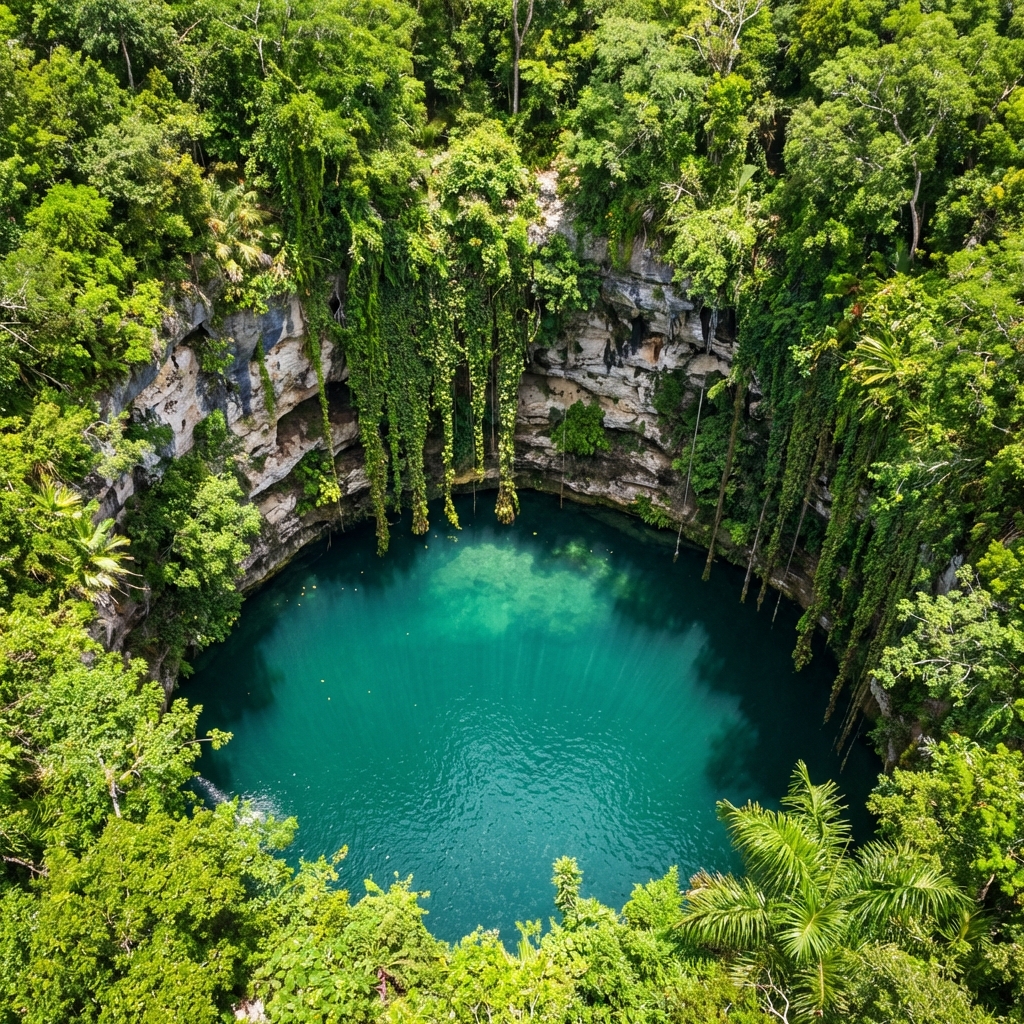
Unlike a fully open “swimming pool” style cenote or a completely enclosed “cave” cenote, Gran Cenote is classified as a semi-open cenote. This geological formation offers the best of both worlds: open-air sections with collapsed ceilings that allow for sunbathing and lush jungle views, connected by subterranean wooden boardwalks and water-filled tunnels that pass beneath the limestone bedrock.
The water here is renowned for its clarity, maintaining a cool, refreshing temperature of roughly 24°C (75°F) year-round.
2025/2026 Visitor Logistics
Before you head out, it is crucial to be prepared for the updated entry requirements and costs, as these have changed recently.
Entrance Fees & Payment
- General Admission: 500 MXN (approx. $25–$27 USD) per person.
- Payment Method: Cash Only. While some sources suggest USD is accepted, the exchange rate is often poor. It is strongly advised to bring Mexican Pesos. Credit cards are generally not accepted at the ticket booth.
- Inclusions: The 500 MXN fee typically includes a life jacket (which is mandatory) and snorkeling gear.
- Note: Some recent reports indicate that gear rental policies fluctuate, and you may occasionally be asked to rent a snorkel separately if you do not bring your own. It is safest to bring your own mask to ensure fit and hygiene.
Opening Hours
- Daily: 8:00 AM – 4:45 PM.
- Last Entry: Strictly at 4:15 PM.
Location & Getting There
Gran Cenote is located on Highway 109 (the road to Coba), approximately 4–5 kilometers (2.5–3 miles) from Tulum town center.
- Bicycle: A popular option. It is a flat, 20–30 minute ride from Tulum Pueblo.
- Taxi: Costs approximately 200–300 MXN one-way from Tulum town.
- Colectivo: You can catch a colectivo heading toward Coba from downtown Tulum for roughly 40–50 MXN, though you must flag them down and they may be full.
Detailed Description: The Swimming Experience
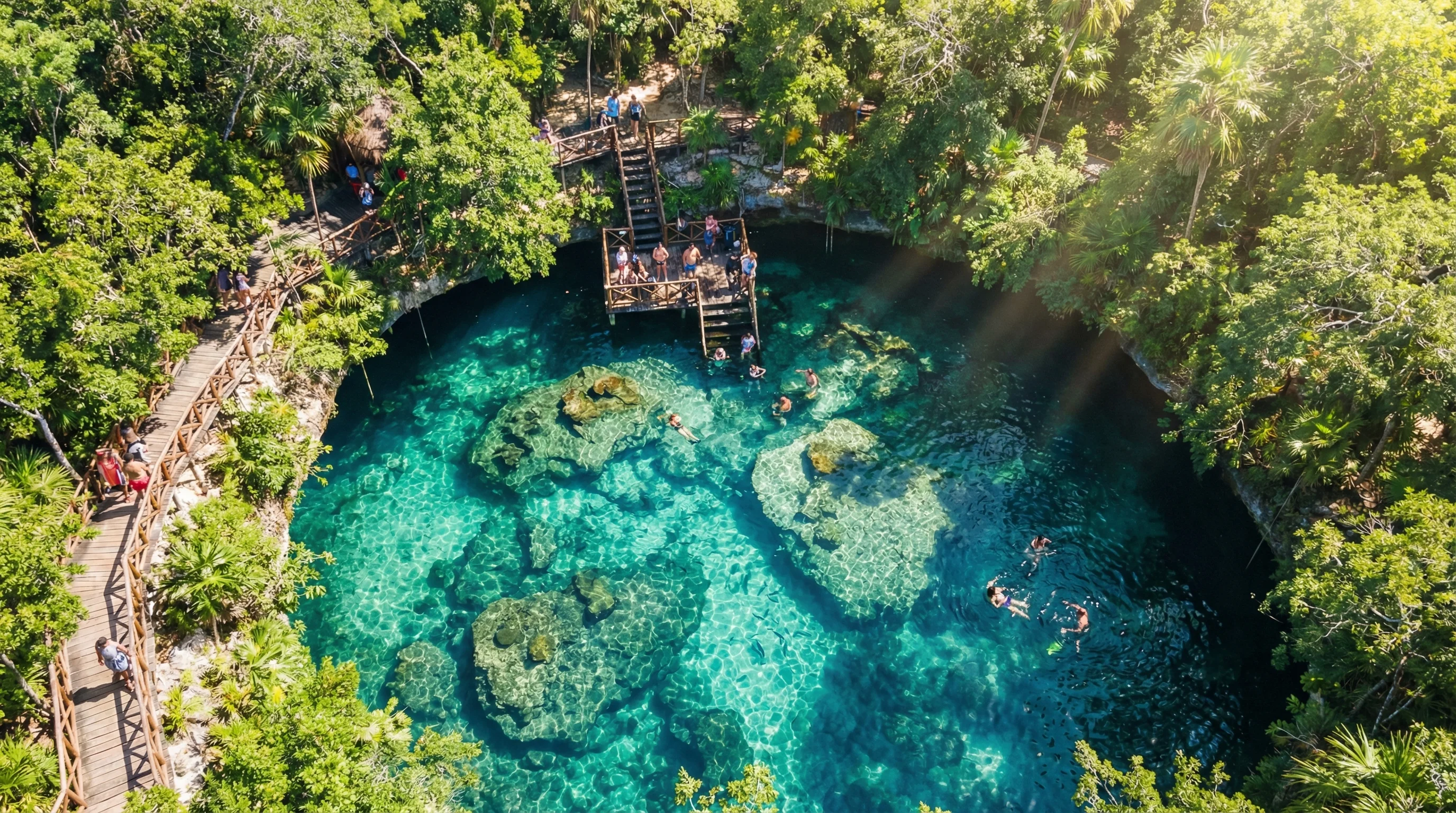
Gran Cenote is shaped roughly like a horseshoe or a crescent, comprising two main open-air swimming areas connected by a cave tunnel.
The Open-Air Areas
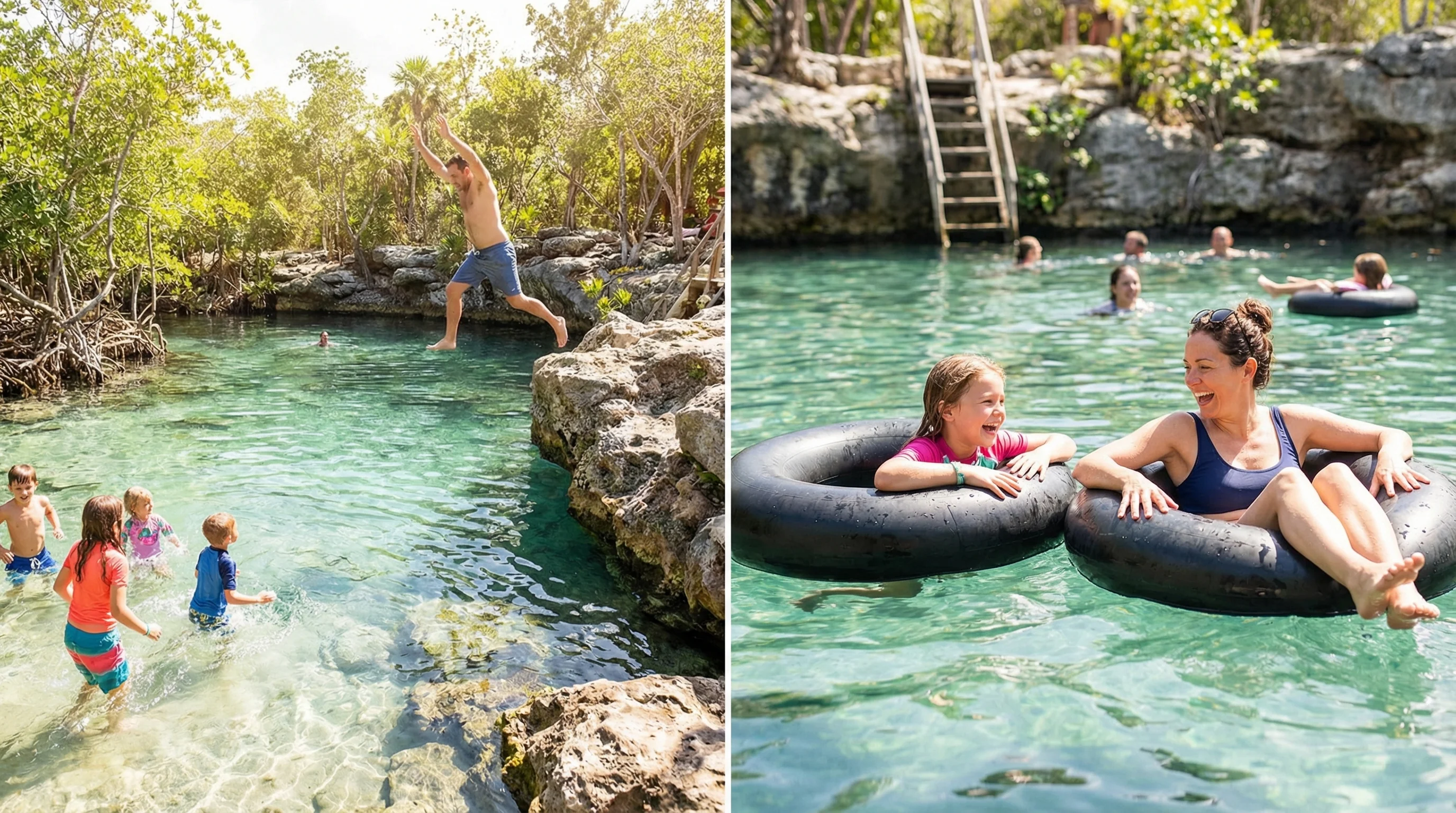
Upon descending the wooden stairs, you enter the main swimming area. The floor here is sand and limestone, giving the water a brilliant turquoise hue.
- Depth: There are shallow sandy areas near the edges where you can stand (waist-deep), making it accessible for non-swimmers and children.
- Vegetation: The open areas are surrounded by jungle greenery, with lily pads often floating on the surface and roots from overhead trees dipping into the water.
- Decks: Extensive wooden boardwalks connect the entrance to the water, providing space to sit and dangle your feet, though these areas can get crowded.
The Cave & Tunnel
The highlight for many is the swim from the main pool to the second pool through a cavernous tunnel.
- The Swim: You can swim underneath a natural limestone archway. This section is darker, but the water remains crystal clear.
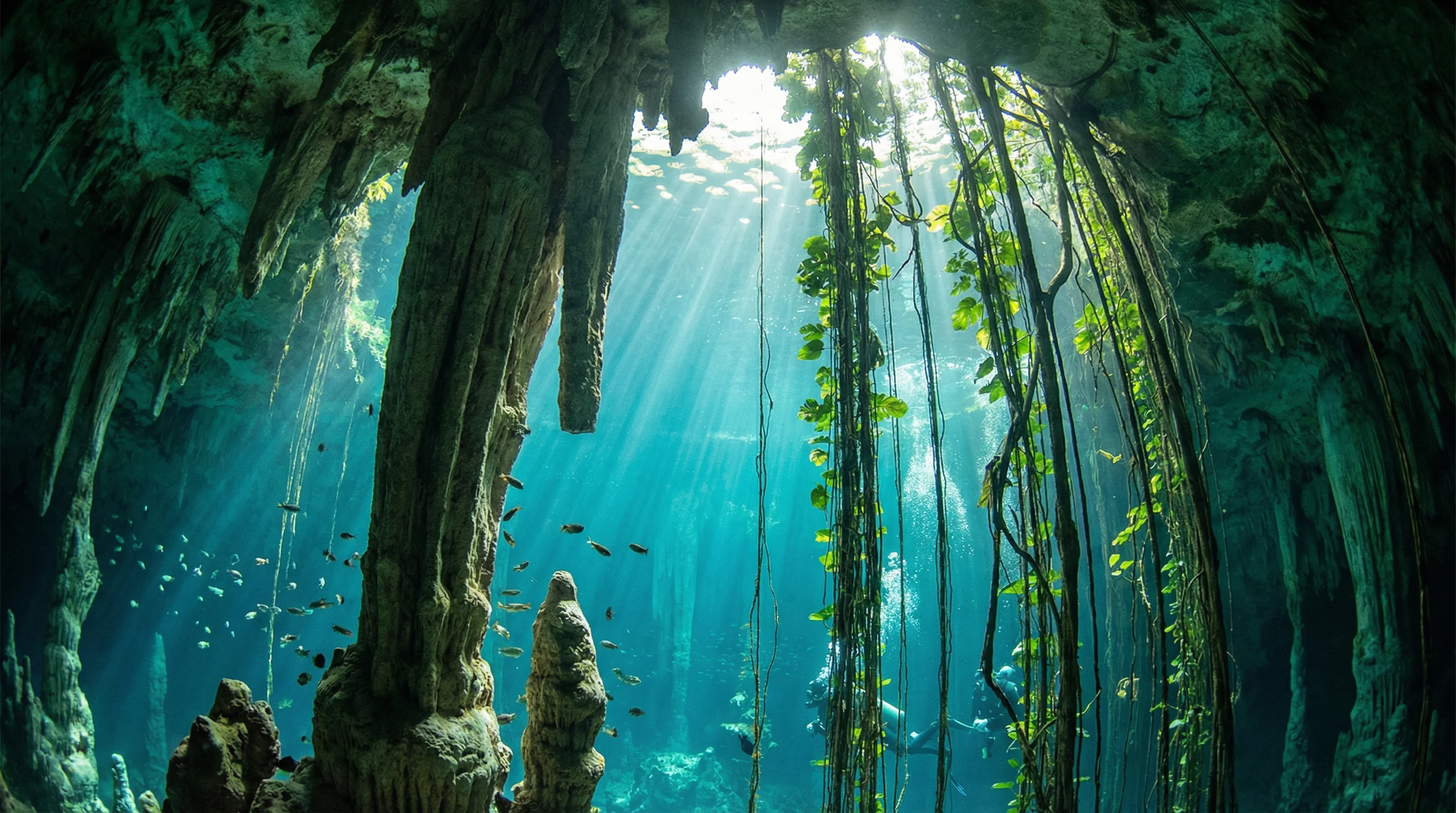
- Formations: As you swim through, look down and up (carefully). You will see massive stalactites hanging from the ceiling and stalagmites rising from the deep.
- Bats: The ceiling of the cave section is home to a colony of bats. You will likely hear them chirping or see them fluttering high above. They generally ignore swimmers, but it is a distinct part of the “jungle” atmosphere.
- Light Beams: In the semi-open transition zones, sunlight pierces through holes in the rock ceiling, creating ethereal “light curtains” in the water that are spectacular for photography.
Snorkeling & Wildlife: The Turtle Experience
Gran Cenote is widely considered one of the best snorkeling cenotes in Tulum due to its high visibility and shallow access to cave formations.
The Turtles

- Species: These are freshwater turtles (often Red-Eared Sliders or similar terrapin species), not the giant sea turtles found at Akumal.
- Behavior: They are accustomed to humans and can often be seen swimming among the snorkelers or sunbathing on logs and rocks near the edges of the cenote.
- Interaction Rules: You must not touch the turtles. The oils and bacteria on human skin can harm their shells and health. Simply observe them gliding through the clear water.
Other Marine Life
- Fish: You will see small freshwater fish such as mollies, guppies, and cichlids. They are often curious and may swim close to you.
- Blue Crabs: Occasionally, small blue crabs can be spotted on the rock walls or near the water’s edge.
Facilities & Amenities
Gran Cenote is well-developed for tourism, offering more amenities than the more rustic cenotes in the region.
Lockers
- Availability: Yes, lockers are available for rent.
- Cost: Approximately 30–50 MXN.
- Requirement: You will almost certainly be asked to leave a government-issued ID (driver’s license or passport card) as a deposit for the locker key. Do not forget to bring one.
Showers & Hygiene
- Mandatory Showers: There are outdoor showers located near the entrance. You must rinse off before entering the water to remove lotions, perfumes, and chemicals.
- Sunscreen Policy: Sunscreen (even biodegradable) is generally prohibited to protect the fragile ecosystem. It is highly recommended to wear a rash guard or swim shirt for sun protection instead.
Bathrooms & Changing Rooms
- Restrooms: There are functional, basic toilets on-site.
- Changing Areas: Designated changing rooms are available, though they can be rustic.
Food & Drink
- On-Site: There are no full-service restaurants inside the cenote grounds, but there is a small shop/stall area near the entrance selling snacks and drinks.
- Picnics: There is a grassy area with picnic tables where you can relax. Some visitors bring their own snacks, but alcohol is strictly forbidden.
Important Rules & Tips for 2025
- Camera Policy: Gran Cenote has become stricter regarding cameras. Professional cameras (DSLRs) and drones are generally prohibited. Action cameras (like GoPros) are usually allowed, but you may be charged an additional fee (often around $50 MXN or more) to bring them in. Phone photography is permitted.
- Life Jackets: Wearing a life jacket is mandatory for all swimmers, regardless of swimming ability. This rule is strictly enforced to prevent swimmers from diving too deep or touching the delicate cave floor.
- Arrive Early: By 10:00 AM, the water can become crowded, stirring up sediment and reducing visibility. For the “glass-like” water experience, arrive at 8:00 AM.